
Summary
Working with the Diocese of Bath & Wells, we’re developing a practical, replicable model that enables Dioceses to unlock assets in their sphere of influence for renewable energy generation. The feasibility study will map governance structures, assess technical viability, and co-design delivery models with parishes and communities. The aim is a blueprint scalable across all 42 Church of England Dioceses in Britain. Dioceses steward substantial buildings and land, and have huge potential to contribute to the community energy landscape.
What problem are we trying to solve?
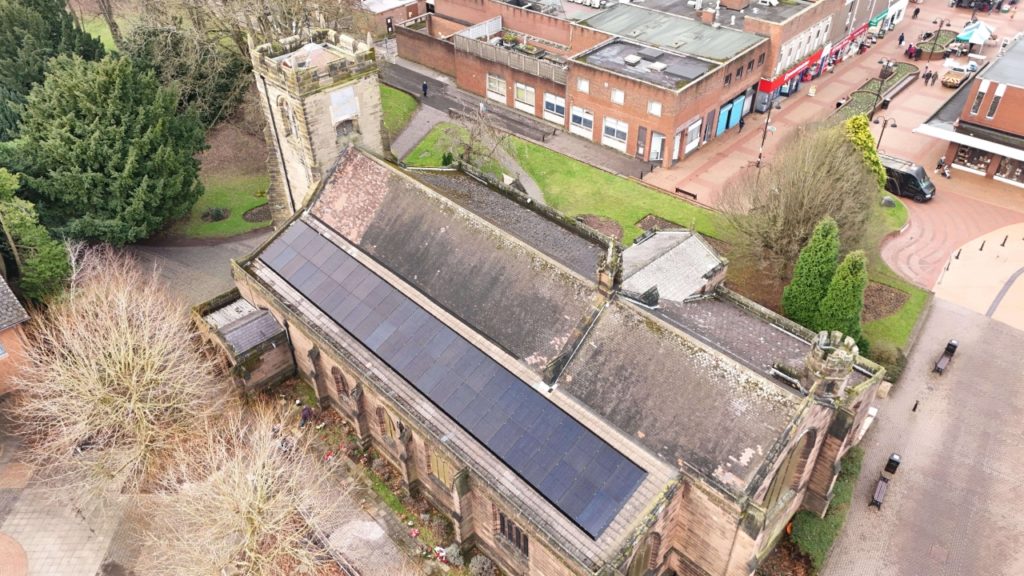
Dioceses have had relatively little development of renewable energy projects, despite significant assets with potential in their sphere of influence- for example over 550 churches, 180 schools as well as church halls and glebe land in Bath and Wells. Common barriers have caused this – including complex governance, layered ownership structures, and diverse building archetypes. Communities and Dioceses both stand to benefit from community-owned energy projects, but nobody has developed a standardised way to overcome the barriers and enable this potential to be developed.
Why does this matter?
If the model works, the potential is significant. Community-owned energy projects on Diocese sites could reduce energy costs for parishes and schools, generate income that flows back into local communities, and support the Church of England’s commitment to reaching net zero by 2030.
Two thirds of the Diocese is rural, where energy costs are often higher and services harder to reach, making local, community-owned generation particularly valuable. Beyond Bath & Wells, a proven model could open up similar opportunities across the country.
How are we doing this?
We’re conducting a feasibility study to map governance and ownership across different property and land types, identify viable project pathways, and co-design three scalable delivery models with parishes, schools, and Diocesan bodies. The work will produce practical “playbooks” covering governance, planning, finance, and community ownership, alongside detailed case studies showing how the model could be applied in rural, urban, and financially disadvantaged parishes.
Who are we working with?
The Diocese of Bath & Wells, including its Net Zero Advisor, Diocesan Board of Finance, Board of Education, and parish communities. The Church of England’s national Net Zero team has also endorsed the approach and is exploring co-funding for future delivery. The feasibility study is funded by the Great British Energy Community Energy Fund, through the South West Net Zero Hub.
What is the innovation?
There is currently no standardised framework for delivering community energy across the Church of England’s decentralised estate. This project will develop one. The Diocese Community Energy Model is a new approach to institutional-community collaboration, designed to be replicable across all 42 Dioceses. It could also potentially be adapted to apply across other complex institutional estates such as NHS Trusts and local authorities.
Pure Leapfrog have brought an impressive combination of technical expertise, strategic thinking, and genuine enthusiasm to this project. Their responsiveness, collaborative approach, and understanding of the complexities of diocesan estates has made them an excellent partner to work with.
Dan Wills, Net Zero Project Lead, Diocese of Bath and Wells
May 2026